Beyond the Cornea™
Measuring IOP with Diaton® Transpalpebral Scleral tonometer in Eyes with Contact Lenses, Scleral Lenses and Future Ocular Wearables
As ophthalmology enters the era of wearable eye technology, a new clinical challenge is emerging.
From scleral lenses and therapeutic contact lenses to augmented reality optics, drug-delivery lenses, and future smart contact lenses capable of monitoring ocular health, more devices will remain on the eye for extended periods. These innovations promise to transform vision care, but they also introduce an important question:
How can clinicians measure intraocular pressure (IOP) without removing the device from the eye?
Traditional tonometry depends on direct access to the cornea. When the cornea is covered by a scleral lens or other ocular device, conventional measurement methods become difficult or impossible during wear.
The Diaton® transpalpebral scleral tonometer approaches the problem differently.
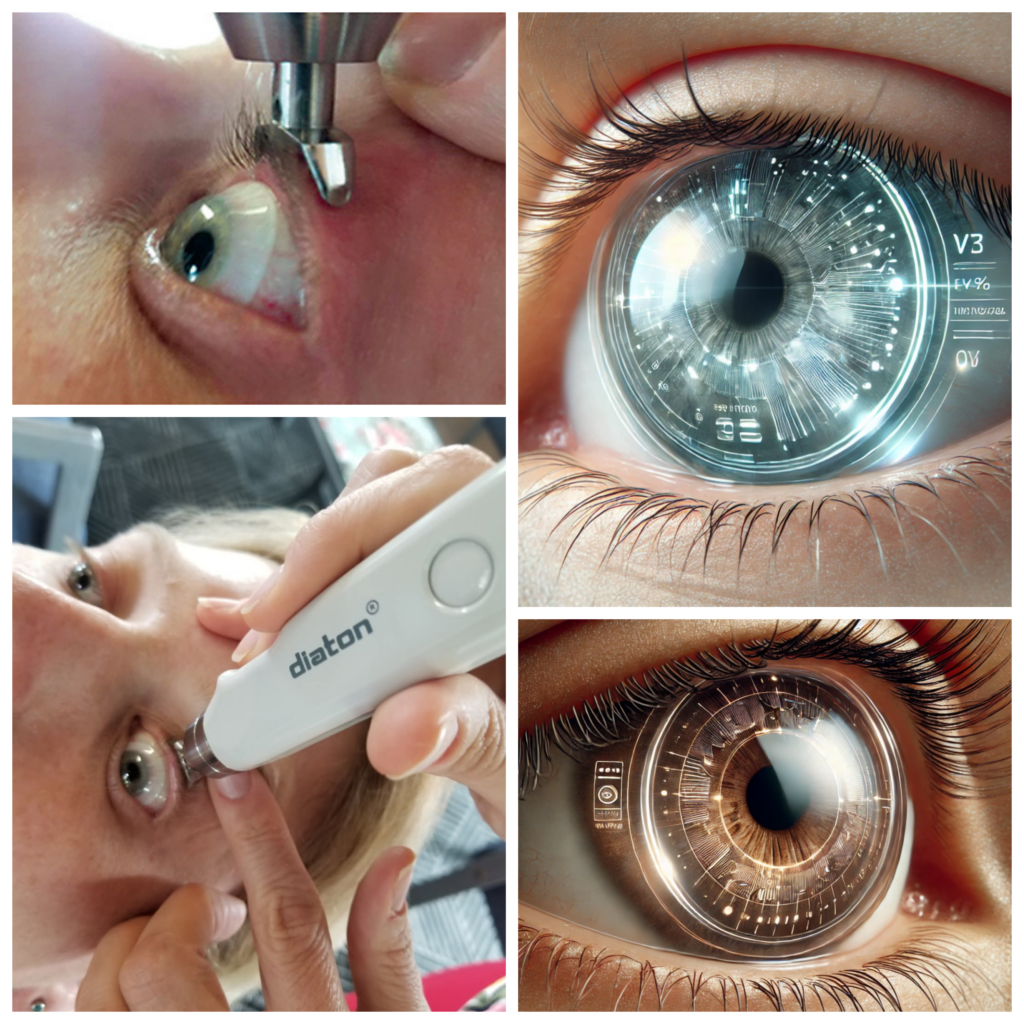
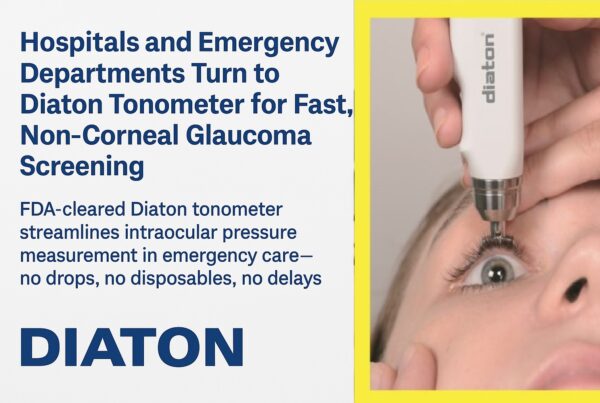
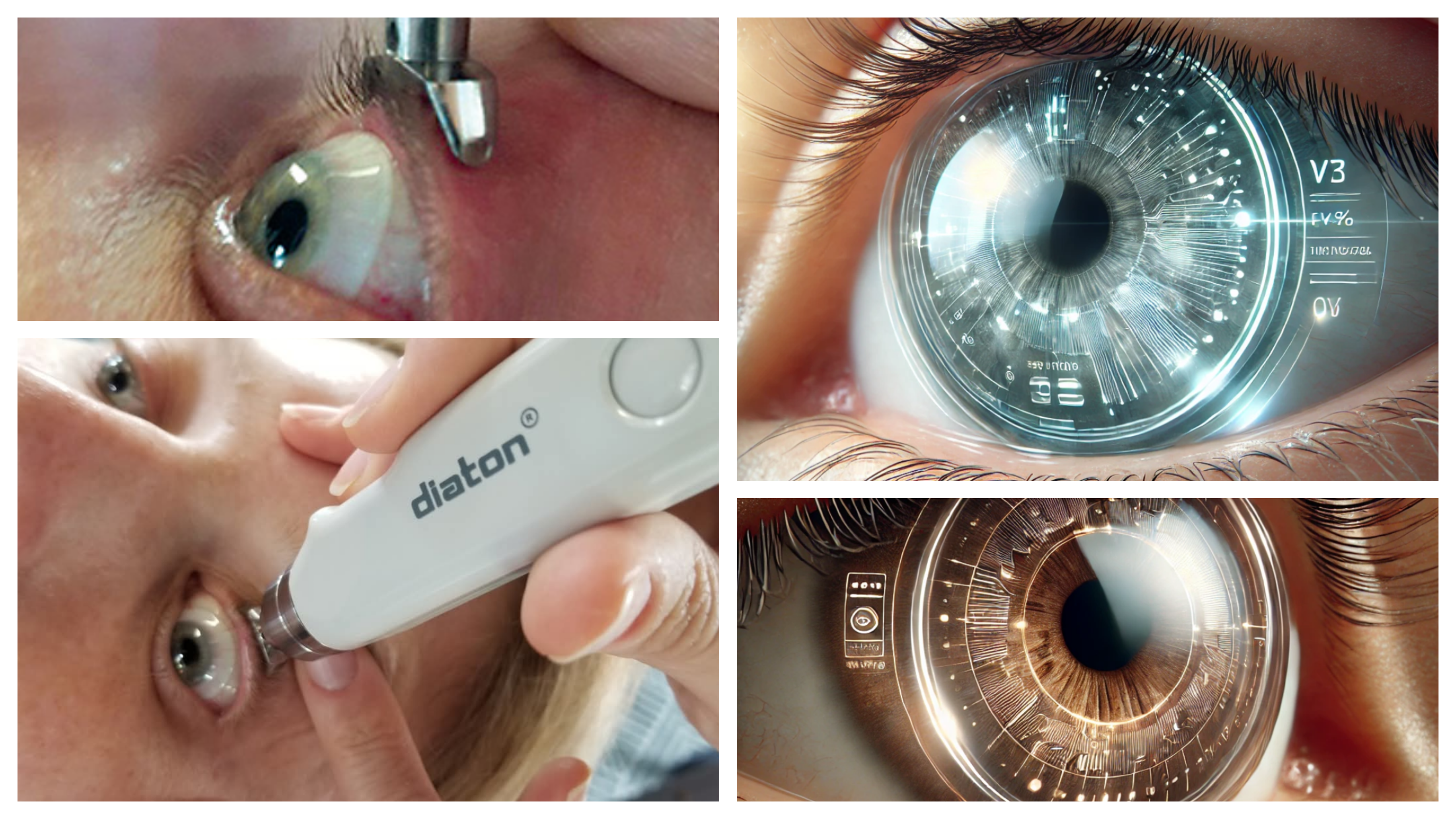
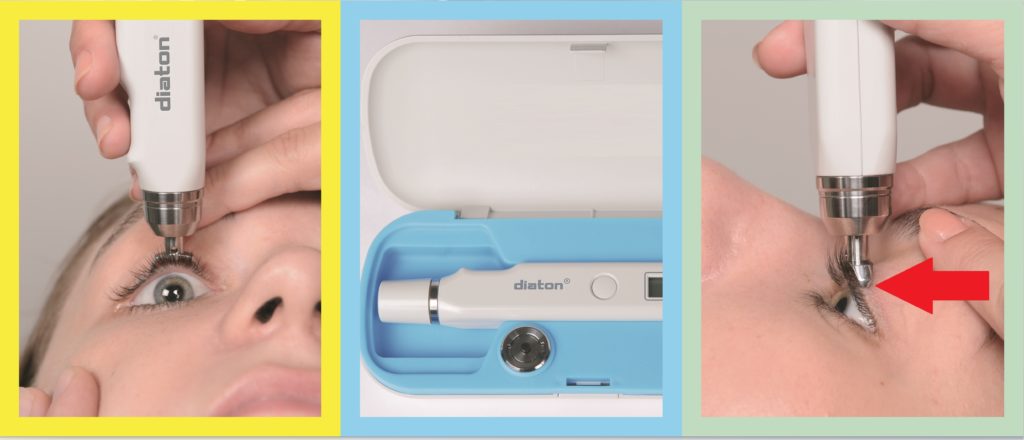
Rather than measuring through the cornea, Diaton measures through the upper eyelid over the sclera, leaving the cornea and any device resting on it undisturbed.
As ocular technologies continue to evolve, this corneal-independent approach may become increasingly valuable.
The Future of Eye Care Is Wearable
Over the next decade, ophthalmology is expected to see rapid adoption of:
- Smart contact lenses
- Scleral lenses
- Drug-delivery contact lenses
- Continuous monitoring lenses
- Therapeutic ocular wearables
- Augmented reality (AR) contact lenses
- Mixed reality (MR) eye devices
- Extended-wear therapeutic lenses
Many of these technologies are designed to remain on the eye for prolonged periods.
That creates a practical clinical question.
Should clinicians remove the device every time intraocular pressure needs to be checked?
In many cases, the answer may be no.
Why Measuring IOP During Lens Wear Matters
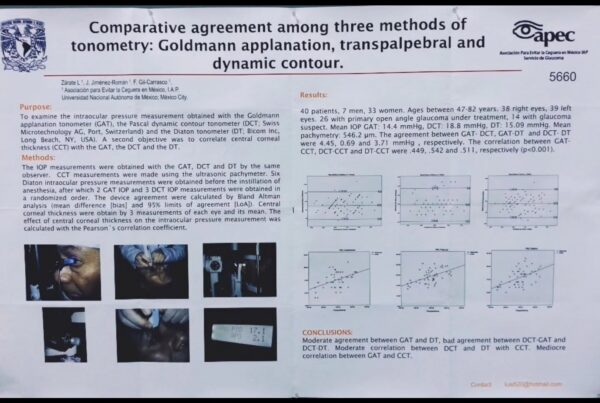
Recent research has highlighted the importance of monitoring intraocular pressure while scleral lenses remain in place.
A 2026 prospective crossover study by Dhungel and colleagues reported 1that healthy participants wearing scleral lenses experienced a significant increase in intraocular pressure during lens wear compared with soft contact lenses. Pressure increased by approximately 4.5 mmHg after scleral lens application and remained elevated throughout the wearing period before returning toward baseline after removal. The study also reported transient retinal nerve fiber layer changes that normalized after lens removal, while emphasizing that further research is needed in glaucoma and ocular hypertension populations before clinical monitoring recommendations can be established.
These findings do not mean scleral lenses are unsafe.
They do suggest that IOP monitoring during wear may become increasingly important, particularly for patients with:
- glaucoma
- ocular hypertension
- keratoconus
- compromised optic nerves
- long-term therapeutic lens wear
- other conditions where intraocular pressure is clinically relevant
Traditional Tonometry Has a Practical Limitation
Goldmann applanation tonometry remains the historical clinical reference standard.
However, Goldmann and most conventional tonometers require direct access to the cornea.
If the cornea is covered by:
- a scleral lens
- a therapeutic lens
- a future smart contact lens
- an ocular wearable
the device generally must be removed before corneal tonometry can be performed.
Removing the lens may interrupt the therapeutic environment and changes the clinical situation being evaluated.
In many cases, clinicians may wish to understand the eye’s physiology while the device is still being worn.
A Corneal-Independent Measurement Pathway
Diaton follows a different measurement pathway.
Instead of contacting the cornea, the instrument measures through the upper eyelid over the sclera.
The measurement site is positioned approximately 1–2 mm above the limbus, allowing the cornea and any lens resting on it to remain untouched.
This means the corneal surface does not need to be accessed during measurement.
The clinical workflow becomes:
Lens stays on.
Cornea remains untouched.
IOP can be assessed without interrupting lens wear.
Why This May Become Increasingly Important
Today’s scleral lenses represent only the beginning of wearable ophthalmic technology.
Researchers worldwide are developing:
- smart contact lenses
- biosensing lenses
- glaucoma-monitoring lenses
- drug-delivery lenses
- glucose-monitoring lenses
- AR contact lenses
- extended therapeutic ocular devices
As these technologies mature, clinicians and researchers will likely need methods to evaluate the eye without repeatedly removing the device.
A corneal-independent measurement pathway naturally fits into this future.
Supporting Innovation Across Ophthalmology
The importance extends beyond routine patient care.
Manufacturers developing future ocular technologies must demonstrate safety.
Researchers must monitor patients over time.
Clinical investigators need practical ways to assess intraocular pressure during device wear.
Optometrists and ophthalmologists will continue to play a central role in evaluating these new technologies.
Corneal-independent tonometry may become one of the tools supporting that evaluation.
A Complementary Approach
Corneal-independent tonometry is not intended to replace every existing method.
Instead, it provides an additional clinical option when direct corneal access is undesirable, impractical, or impossible.
Examples include:
- scleral lenses
- post-refractive surgery patients
- corneal scarring
- keratoconus
- severe dry eye disease
- ocular surface disease
- therapeutic contact lenses
- pediatric screening
- emergency departments
- outreach screening programs
Different clinical situations may call for different measurement approaches.
Looking Beyond Today
Many innovations initially appear specialized before becoming routine.
The same may occur with ocular wearables.
As eye care moves toward continuous monitoring, personalized medicine, and wearable ophthalmic technology, clinicians will increasingly need diagnostic tools that work without depending on direct corneal access.
Diaton was designed around that principle years before these technologies began entering clinical practice.
In that sense, corneal-independent tonometry is not simply a solution for today’s scleral lenses.
It is a platform that may support the next generation of ophthalmic innovation.
Frequently Asked Questions
Can eye pressure be measured while wearing scleral lenses?
Yes. Transpalpebral tonometry using the Diaton tonometer measures through the upper eyelid over the sclera, allowing measurement while scleral lenses remain in place.
Can scleral lenses affect intraocular pressure?
Recent research has reported transient increases in intraocular pressure during scleral lens wear in healthy participants, highlighting the importance of continued research and appropriate monitoring in selected patients.
Does Diaton touch the cornea?
No.
The Diaton tonometer measures through the upper eyelid over the sclera without contacting the cornea.
Can eye pressure be measured without anesthetic drops?
Yes.
Because the cornea is not touched, topical anesthetic is generally not required when using the Diaton tonometer.
Can Diaton be useful after LASIK or PRK?
Because Diaton uses a corneal-independent measurement pathway, it may provide complementary information in patients whose corneal biomechanics have been altered by refractive surgery. Clinical interpretation should always be based on the complete ophthalmic examination.
Is Diaton intended to replace Goldmann tonometry?
No.
Goldmann applanation tonometry remains an important clinical reference method. Diaton offers a complementary, corneal-independent approach that may be useful in selected clinical situations.
Conclusion
As ophthalmology evolves beyond traditional contact lenses toward smart ocular wearables, continuous monitoring technologies, and advanced therapeutic devices, clinicians will require diagnostic tools that evolve alongside them.
The future of intraocular pressure monitoring may not always begin at the cornea.
Sometimes, the best pathway is beyond the cornea.
Learn more about Diaton Tonometer:
- Diaton product page
- 100 Questions and Answers on Diaton
- How to use the Diaton Tonometer technique
- Diaton in post-LASIK / corneal pathology
- Diaton in emergency medicine / broader screening environments
- Glaucoma screening / glaucoma awareness
Learn more about – www.TonometerDiaton.com
Contact Team Diaton via Phone: 1-877-342-8667
Editor’s Note:
This article is intended for educational purposes for eye care professionals and healthcare providers interested in tonometry, glaucoma screening, and corneal-independent approaches to intraocular pressure assessment.
- Dhungel, P.; Alanazi, M.K.; Caroline, P.; Yudcovitch, L.; Liu, M. Short-Term Impact of Scleral Lens Wear on Intraocular Pressure and Retinal Nerve Fiber Layer Thickness. Life 2026, 16, 1094. https://doi.org/10.3390/life16071094 ↩︎