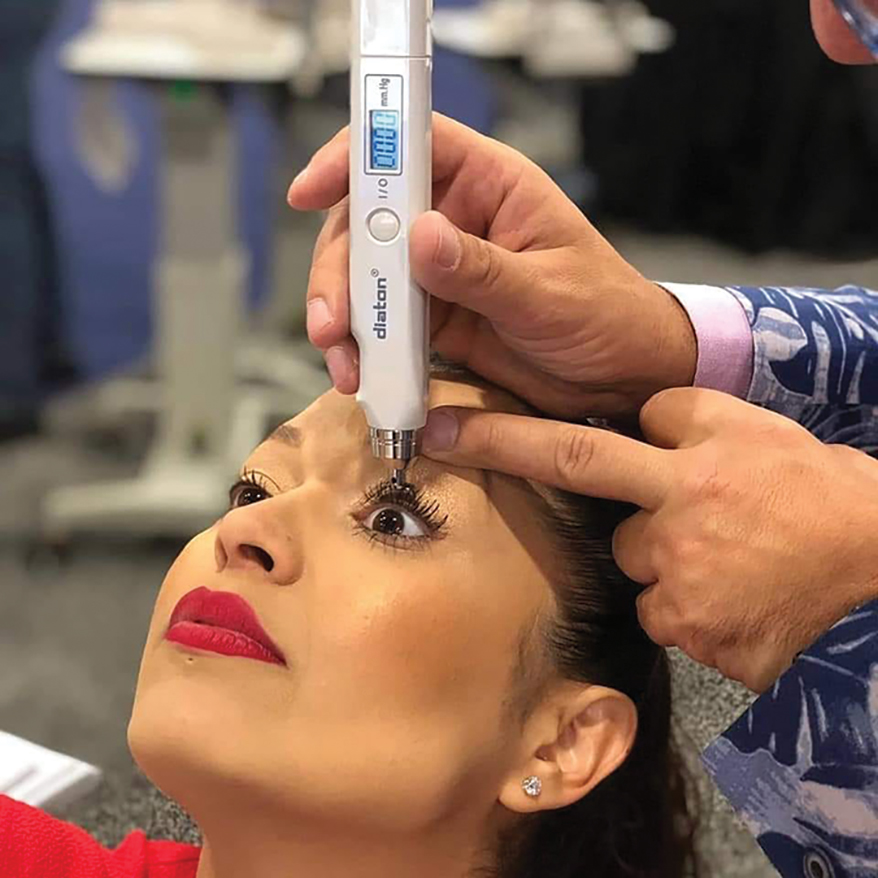
Eliminate Corneal Contact, Consumable Costs, and Diagnostic Delays in the Trauma Bay
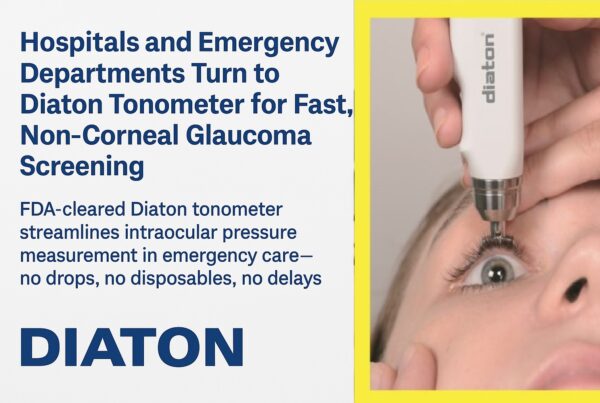
The DIATON Transpalpebral Tonometer is an FDA-cleared, non-invasive diagnostic device added to hospital Essential Healthcare Supplies Lists worldwide. By measuring intraocular pressure (IOP) through the upper eyelid and sclera, DIATON bypasses the cornea completely. This provides emergency physicians with rapid, accurate metrics without the operational bottlenecks of traditional applanation tonometry.
The Corneal Hysteresis Blind Spot in Emergency Medicine
Most emergency rooms rely on traditional corneal-contact tonometers. These devices are calibrated based on the mathematical assumption of a perfectly healthy, uniform cornea.
However, corneal hysteresis—the eye’s internal biomechanical rigidity and resistance—varies wildly from patient to patient. In an acute care setting, this creates a dangerous diagnostic blind spot:
- Corneal Pathology Distortion: Conditions like corneal edema, acute trauma, chemical burns, or keratitis alter corneal thickness, causing contact tonometers to yield highly inaccurate or impossible readings.
- The Post-Refractive Variable: Patients with prior LASIK or PRK surgery have permanently thinned central corneas. Standard corneal applanation severely underestimates their true IOP, risking missed glaucoma spikes.

The DIATON Solution:
DIATON measures pressure at the superior limbus through the eyelid. Because it does not touch or flatten the center of the cornea, DIATON is completely independent of corneal thickness, rigidity, and hysteresis variables. You get true, uncorrupted intraocular pressure metrics on any eye, regardless of past surgeries or current anterior segment trauma.
Clinical Advantages in Acute Care Settings
- Zero Corneal Contact: Bypasses open wounds, corneal abrasions, and chemical injuries safely.
- No Anesthetic Drops Required: Eliminates the need to locate, track, and administer topical numbing agents.
- No Disposable Tips or Covers: Removes ongoing inventory strains and supply chain vulnerabilities.
- Zero Cross-Contamination Risk: Bypassing direct mucous membrane contact eliminates the pathway for iatrogenic pathogen spread.
- Bedside Maneuverability: Handheld, lightweight design allows for rapid exams on supine, immobilized, or pediatric patients.
- Lens-Compliant Utility: Captures accurate, immediate IOP readings even while the patient is actively wearing contact or scleral lenses.
Operational & Procurement Impact Matrix
| Feature Variable | Traditional Corneal Tonometry (e.g., Tono-Pen) | DIATON Transpalpebral Scleral Tonometry |
|---|---|---|
| Consumable Overhead | Continual spending on plastic tips, rubber covers, and numbing drops. | Zero ongoing consumable costs. One-time device acquisition. |
| Sterilization Compliance | High risk if plastic single-use barrier supplies are compromised. | Meets and exceeds Joint Commission Guidelines for disinfection and sterilization. |
| Staff Training Requirements | Specialized technique requiring careful corneal applanation angles. | Rapid staff deployment. Easily operated by nurses, EMTs, and technicians. |
| Patient Compliance | High anxiety and resistance due to approaching corneal contact elements. | Maximum comfort. Peaceful, painless measurement through upper eyelid. |
Frequently Asked Clinical Questions
How does the DIATON tonometer maintain accuracy without corneal applanation?
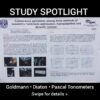
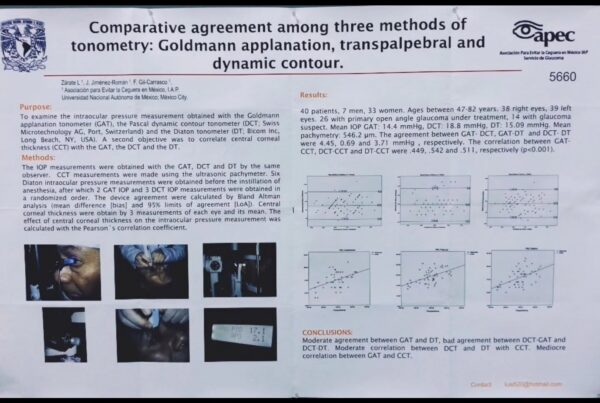
The DIATON tonometer utilizes a unique, FDA-cleared ballistic measurement principle that assesses intraocular pressure through the tarsal plate of the upper eyelid. By directing the impact forces through the peripheral sclera rather than the cornea, the device circumvents central corneal structural variations. Clinical comparison trials show no statistically significant variance in mean IOP outcomes when tracked alongside gold-standard Goldmann applanation and traditional corneal contact metrics (p=0.87).
Why is transpalpebral tonometry safer for hospital emergency rooms?
Emergency departments frequently care for patients experiencing ocular trauma, severe chemical exposure, or active infectious conjunctivitis. Standard tonometers require direct contact with the eye’s mucous membranes, increasing the risk of introducing iatrogenic corneal injury or cross-contaminating staff and subsequent patients. Because DIATON performs its screening entirely over the eyelid surface, the risk of cross-infection or exacerbating a corneal wound is null.
How do you accurately measure IOP after myopic LASIK?
According to a clinical study in the Journal of Ophthalmology, traditional corneal tonometry underestimates post-LASIK pressure due to central corneal thinning. Transpalpebral tonometry via the Diaton tonometer is not influenced by corneal ablation, making it the preferred clinical tool for post-refractive surgery patients.
Can DIATON be used on pediatric, geriatric, or uncooperative emergency patients?
Yes. Traditional applanation tonometers trigger an intense, involuntary blink reflex and severe anxiety, particularly in children, dementia patients, or individuals experiencing acute trauma. Because DIATON requires no topical anesthetic drops and measures gently through a closed upper eyelid while the patient looks at a 45-degree angle, it completely bypasses the patient’s defensive eye-closure response. This dramatically improves clinical compliance and allows rapid, accurate readings across all age demographics.
Why is measuring IOP through the sclera more reliable than measuring through the cornea?
The central cornea is highly susceptible to structural changes caused by aging, disease, trauma, chemical exposure, and prior refractive surgeries like LASIK or PRK. These changes alter corneal hysteresis and rigidity, causing traditional tonometers to show dangerously inaccurate pressure readings. The sclera (the white part of the eye) does not undergo these rapid structural variations. By measuring transpalpebrally over the scleral margin, DIATON bypasses the “corneal hysteresis puzzle,” delivering true, uncorrupted intraocular pressure metrics regardless of corneal pathology.
Is the DIATON tonometer durable enough to handle a high-volume Emergency Department environment?
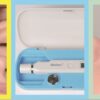
DIATON is engineered specifically for mobile, heavy-duty clinical environments. Unlike fragile ophthalmic lane equipment, slit lamps, or delicate gold-plated contact prisms, the DIATON device is a robust, handheld, pen-like instrument. It does not require continuous daily calibration, possesses no delicate external lenses to scratch, and is housed in a durable casing designed to withstand the rapid pace of high-volume trauma bays, urgent care centers, and mobile medical screening vans.
Diaton Tonometer Bringing Eye Pressure Screening to Mainstream Healthcare.
Contact Team Diaton: www.TonometerDiaton.com / 1-877-342-8667